Blue health
Taking a team down to the water, and what stays with them
What the shoreline changes in the way a team talks to itself, and the practical things worth knowing before you book a morning by the water in Marseille.
7 min read
The first time, nearly everyone does the same thing. The fingers close around the rails and the shoulders shoot up towards the ears. The eyes, meanwhile, drop straight down to the feet. Then the board begins to wobble, on a morning when the sea is completely flat.
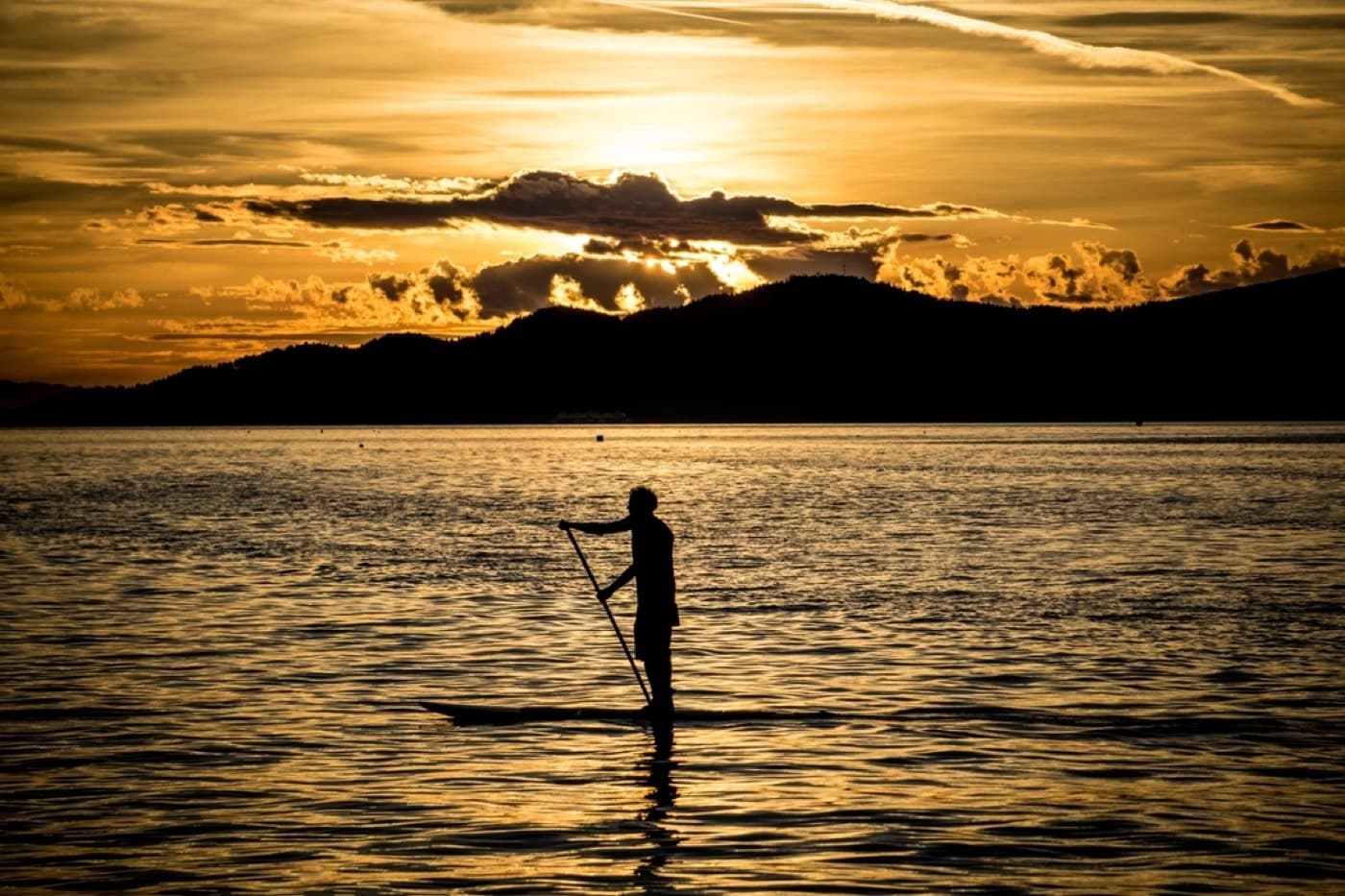
I teach these classes off Pointe Rouge, early in the morning, before the beach fills up and before Marseille starts sounding its horns. It took me years to work out why I care about it so much. The board reads whatever is going on inside the person standing on it and hands it back within seconds: it does not judge, it translates. Nothing I run in a studio moves that fast.
In a room, with a mat and a floor that stays put, you can compensate for years: squeeze the thighs, clamp the jaw, hold on through effort and call the result technique. I did exactly that for a long time without noticing. On the water it lasts about thirty seconds. Tension turns into a tremor, the tremor turns into a wobble, and sooner or later your palms end up flat on the board. I give the same three cues every session: loosen your hands, lengthen the out-breath, look a long way ahead. With your eyes glued to your feet you are hunting for balance in ten square centimetres; with your eyes on the sea wall you borrow the steadiness of something enormous that never moves. The long exhale handles the rest, dropping the shoulders and taking the edge off the small panic that has just begun.
Nobody has ever won an arm wrestle with a paddleboard.
Plenty of people turn up convinced you have to be athletic to get up there. The most comfortable ones are almost never the fittest: a woman of sixty who has swum all her life often has an easier hour than a thirty-year-old runner trained to push through everything. Then there is the quiet. Three hundred metres out, no music, no notification, and several people have told me it was their first unreachable hour in months. I do not strap a speaker to my board and I do not take photographs during class. Wellbeing that ends in a story bores me.
Almost everyone arrives with that question, asked with a laugh to keep it light. My answer never changes: yes, you might go in, and honestly it does not matter at all. We are in the sea, in summer, next to an object that floats remarkably well. The people who tip in during the first ten minutes relax for the entire rest of the class, and I have seen it too often to call it a coincidence. The expensive part is spending forty minutes not falling. You already know that expense on dry land: the Tuesday in November when you tense up over breakfast about a three o'clock meeting, in the windowless room on the second floor.
I have no idea whether it works for everyone. Some people come back to the beach with their shoulders down and their voice settled, telling me they have not thought about their day for an hour. Others mostly get cold. In September we set off at first light, the water is still warm, and the sand sticks to wet feet all the way to the car. Bring a second towel.
Written by Virginia Philippe, wellbeing coach in Marseille. What you read here is practical guidance, not medical advice: if in doubt, speak to your doctor.
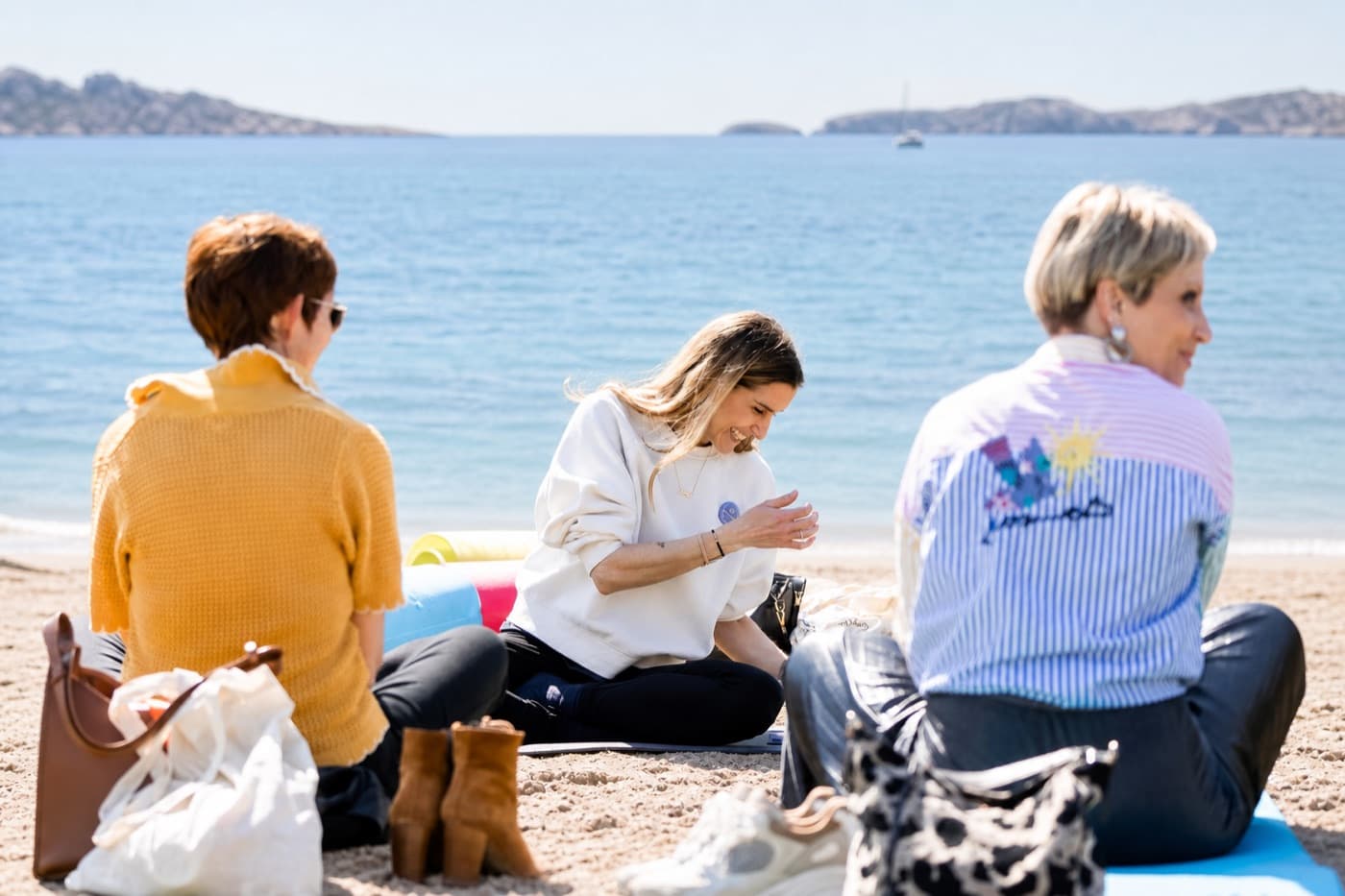
Would you rather practise than read about it? Sessions by the water are booked in small groups, and workplace sessions are built around your own context.
Blue health
What the shoreline changes in the way a team talks to itself, and the practical things worth knowing before you book a morning by the water in Marseille.
7 min read

Blue health
Walking slowly by the water for twenty minutes, phone at the bottom of the bag. What I look at, what I listen to, and exactly how I run those twenty minutes myself.
5 min read
Blue health
Cold immersion fascinates people and gets credited with a lot. What I really see in the Mediterranean, why breathing comes first, and the cases where I say no.
7 min read